Conference Dates
November 23-25, 2026
The International Plant Molecular Biology and Biotechnology Conference (IPMB 2026) is a premier global forum dedicated to advancing knowledge at the intersection of plant science, molecular biology, and cutting-edge biotechnology. Scheduled for November 23–25, 2026, in Singapore with seamless online participation, IPMB 2026 brings together visionary scientists, biotechnologists, academicians, industry leaders, and early-career researchers from around the world. The conference is designed to foster meaningful scientific exchange while addressing the urgent challenges facing agriculture, food security, climate resilience, and sustainable development through plant-based innovations.
Theme: “Biotechnology Driving the Future of Plants”
Beyond scientific sessions, IPMB 2026 emphasizes collaboration, innovation, and global networking. The hybrid format ensures inclusive participation, enabling researchers from diverse regions to connect, share perspectives, and build lasting partnerships. Hosted in Singapore a global hub for science, technology, and sustainability the conference offers an inspiring environment that reflects its mission: empowering the plant science community to decode the molecular language of plants and harness biotechnology for a greener, more resilient planet. IPMB 2026 invites you to be part of this transformative journey, where science, innovation, and sustainability converge.
Plant Molecular Biology focuses on understanding the molecular and genetic mechanisms that regulate plant growth, development, and adaptation. This session will explore advances in plant genomics, gene expression analysis, and regulatory networks that control essential biological processes. Emphasis will be placed on transcription factors, epigenetic modifications, and signal transduction pathways that enable plants to respond to environmental stimuli such as drought, salinity, temperature stress, and pathogen attack. Cutting-edge approaches including next-generation sequencing (NGS), functional genomics, and bioinformatics tools will be discussed to illustrate how large-scale molecular data are transforming plant research.
The session will also highlight translational research and applied innovations in plant biotechnology. Topics include CRISPR/Cas-mediated genome editing, molecular breeding, and metabolic pathway engineering aimed at improving crop yield, stress tolerance, and nutritional quality. Special attention will be given to plant–microbe interactions, molecular defense mechanisms, and the integration of omics technologies for sustainable agriculture. By connecting fundamental molecular insights with practical agricultural applications, this session provides a comprehensive overview of how molecular biology is shaping the future of plant science.
Key Highlights
Why This Session Is Important?
Plant Molecular Biology is essential for addressing critical global challenges such as food security, climate resilience, and sustainable crop production. Understanding plant systems at the molecular level enables the development of high-yield, stress-resistant, and nutritionally enhanced crops. This session brings together researchers and practitioners to translate molecular discoveries into innovative solutions that support agricultural sustainability and environmental resilience.
Plant Cell Biology and Molecular Biotechnology focuses on the structural, functional, and molecular organization of plant cells and their application in modern biotechnology. This session explores cellular architecture, organelle function, and cell cycle regulation, highlighting how intracellular processes coordinate plant growth and development. Emphasis will be placed on cell signaling pathways, cytoskeletal dynamics, and cell differentiation mechanisms that govern tissue formation and physiological responses. Advanced molecular tools such as fluorescence imaging, cellular markers, and omics-based approaches will be discussed to demonstrate how plant cell biology provides insights into complex biological systems.
The second part of the session emphasizes applied research in molecular biotechnology, showcasing innovations that translate cellular knowledge into practical solutions. Topics include genetic engineering, CRISPR/Cas genome editing, and plant tissue culture techniques for crop improvement, stress tolerance, and enhanced productivity. Discussions will also address transgenic technologies, metabolic engineering, and the integration of cell biology with molecular breeding strategies. By bridging fundamental cell biology with biotechnological applications, this session highlights how cellular-level understanding drives advances in sustainable agriculture, food security, and plant-based bioproducts.
Key Highlights
Why This Session Is Important?
This session is crucial for advancing plant science from the cellular to the applied level. Understanding plant cells enables precise manipulation of traits essential for crop resilience, yield improvement, and biotechnological innovation. By combining cell biology with molecular biotechnology, this session supports the development of sustainable agricultural solutions and next-generation plant-based technologies.
Plant Genetics and Genomics focuses on understanding the inheritance, variation, and molecular basis of traits that shape plant growth, development, and adaptation. This session explores foundational principles of plant genetics, including gene inheritance, mutation, and recombination, alongside modern genomic approaches that decode complex plant genomes. Emphasis will be placed on genome sequencing, gene mapping, and functional genomics to reveal how genetic information controls phenotypic traits. Advanced methodologies such as transcriptome analysis, molecular markers, and bioinformatics tools will be discussed to demonstrate how large-scale genomic data are accelerating discoveries in both model plants and major crop species.
The session will also highlight applied and translational aspects of plant genomics in crop improvement and sustainable agriculture. Topics include quantitative trait loci (QTL) analysis, genome-wide association studies (GWAS), and the use of marker-assisted selection for developing high-yielding, stress-tolerant, and disease-resistant crops. Discussions will cover comparative genomics and evolutionary genetics to understand genetic diversity and adaptation, as well as the integration of genomic data with breeding programs. By bridging classical genetics with high-throughput genomic technologies, this session provides a comprehensive framework for translating genetic knowledge into practical agricultural and biotechnological solutions.
Key Highlights
Why This Session Is Important?
Plant Genetics and Genomics is essential for meeting global challenges related to food security, climate adaptation, and sustainable crop production. Understanding genetic variation at the genome level enables precise crop improvement strategies and informed breeding decisions. This session empowers researchers and practitioners to harness genetic and genomic knowledge for developing resilient, high-performing plant varieties that support future agricultural sustainability.
CRISPR-Cas9 and Genome Editing in Plants highlights revolutionary tools that enable precise, efficient, and targeted modification of plant genomes. This session will explore the mechanism of CRISPR-Cas systems, focusing on Cas9-mediated DNA cleavage, guide RNA design, and factors influencing editing efficiency and specificity. Emphasis will be placed on emerging technologies such as base editing, prime editing, and multiplex genome editing, which allow refined genetic alterations without introducing foreign DNA. Participants will gain insights into genome editing strategies for functional gene analysis, trait validation, and pathway engineering using modern molecular approaches.
The second part of the session will focus on applied and translational aspects of plant genome editing. Topics include delivery methods such as Agrobacterium-mediated transformation, particle bombardment, and ribonucleoprotein (RNP) systems, along with strategies to minimize off-target effects. Discussions will also address regulatory frameworks, biosafety considerations, and ethical perspectives surrounding genome-edited crops. Case studies on crop improvement, including enhanced stress tolerance, disease resistance, yield optimization, and nutritional enhancement, will demonstrate how CRISPR-based technologies are reshaping sustainable agriculture and modern plant breeding.
Key Highlights
Why This Session Is Important?
CRISPR-based genome editing represents a transformative approach in plant science, enabling rapid and precise crop improvement. This session is crucial for advancing food security, climate-resilient agriculture, and sustainable crop development. By bridging fundamental mechanisms with practical applications, the session equips researchers, breeders, and biotechnologists with the knowledge needed to responsibly deploy genome editing technologies for future agricultural innovation.
Plant Synthetic Biology is an emerging interdisciplinary field that combines plant molecular biology, genetic engineering, and engineering design principles to construct and redesign biological systems for predictable functions. This session focuses on the design and implementation of synthetic genetic circuits, modular DNA components, and programmable regulatory elements that enable precise control of gene expression in plants. Advances in modular cloning, standardized biological parts, and computational modeling will be discussed, highlighting how synthetic approaches allow rational design of complex plant traits. The session will also explore the integration of genome editing technologies with synthetic biology frameworks to accelerate functional validation and trait optimization.
The second part of the session emphasizes real-world applications of plant synthetic biology in agriculture and industry. Topics include metabolic engineering for the production of high-value compounds, pharmaceuticals, and bio-based materials, as well as the development of plants with enhanced stress tolerance, yield, and resource-use efficiency. Discussions will address biosafety, risk assessment, and regulatory landscapes associated with synthetic plant systems. By bridging biological discovery with engineering-driven innovation, this session demonstrates how plant synthetic biology can contribute to sustainable agriculture, green biotechnology, and future bioeconomy solutions.
Key Highlights
Why This Session Is Important?
Plant Synthetic Biology offers transformative solutions for addressing global challenges such as food security, climate change, and sustainable production systems. By enabling programmable and predictable plant traits, this session supports the development of innovative crops and plant-based bioproducts. It brings together researchers and industry experts to translate synthetic designs into scalable, responsible, and impactful plant biotechnology applications.
Systems Biology and Bioinformatics in Plant Science focuses on understanding plants as integrated biological systems rather than isolated components. This session explores how systems biology approaches combine genomics, transcriptomics, proteomics, and metabolomics data to reveal complex gene regulatory networks and molecular pathways underlying plant growth, development, and environmental responses. Emphasis will be placed on data integration strategies, network modeling, and pathway analysis that enable holistic interpretation of large-scale biological datasets. Advanced bioinformatics tools, computational pipelines, and statistical frameworks will be discussed to demonstrate how high-throughput technologies are reshaping modern plant research.
The session will also highlight applied computational approaches that translate multi-omics data into practical insights for agriculture and biotechnology. Topics include machine learning and artificial intelligence for trait prediction, stress response modeling, and phenotype–genotype associations. Discussions will cover the use of public plant databases, visualization platforms, and reproducible bioinformatics workflows to support collaborative research. By integrating computational analysis with experimental biology, this session provides a powerful framework for accelerating crop improvement, enhancing stress tolerance, and supporting sustainable plant production systems.
Key Highlights
Why This Session Is Important?
As plant science enters the era of big data, systems biology and bioinformatics are essential for converting complex datasets into biological understanding. This session equips researchers with integrative and computational perspectives needed to address challenges in food security, climate resilience, and sustainable agriculture, enabling data-driven innovation in plant science.
Omics Technologies in Plant Biotechnology focuses on comprehensive, high-throughput approaches that enable global analysis of plant biological systems at multiple molecular levels. This session will explore advances in genomics, transcriptomics, proteomics, metabolomics, and epigenomics that collectively provide deep insights into gene function, regulation, and metabolic pathways. Emphasis will be placed on how next-generation sequencing, mass spectrometry, and high-throughput phenotyping technologies generate large-scale datasets to elucidate complex traits related to growth, development, and environmental adaptation. The session will also address bioinformatics tools and data integration strategies essential for interpreting multi-dimensional omics data.
The second part of the session highlights translational applications of omics technologies in modern plant biotechnology. Topics include multi-omics integration for trait discovery, stress tolerance analysis, and crop improvement strategies. Discussions will cover how omics-driven insights support molecular breeding, genome editing, and metabolic engineering for enhanced yield, quality, and resilience. By linking molecular-level data with phenotypic outcomes, this session demonstrates the critical role of omics technologies in advancing sustainable agriculture, plant-based bioproduct development, and future-ready biotechnological solutions.
Key Highlights
Why This Session Is Important?
Omics technologies are transforming plant biotechnology by enabling holistic and data-driven understanding of plant systems. This session is crucial for accelerating crop improvement, enhancing stress resilience, and supporting sustainable agricultural innovation. By integrating multiple omics layers, researchers can translate complex molecular information into actionable strategies for global food and environmental security.
Plant Proteomics, Metabolomics, and Phenomics focuses on understanding plant function beyond the genome by analyzing proteins, metabolites, and observable traits that directly shape plant performance. This session will explore advances in plant proteomics, including protein expression profiling, protein–protein interactions, and post-translational modifications that regulate cellular processes. In parallel, plant metabolomics will be highlighted as a powerful approach to study metabolic pathways, secondary metabolites, and biochemical responses associated with growth, development, and environmental stress. Cutting-edge technologies such as mass spectrometry, chromatography-based platforms, and high-throughput analytical tools will be discussed to illustrate how functional molecular data are generated and interpreted.
The second part of the session emphasizes plant phenomics, which connects molecular changes to whole-plant traits through high-throughput phenotyping and advanced imaging technologies. Topics include genotype–phenotype associations, metabolic signatures of stress tolerance, and phenomic approaches for yield and quality assessment. Discussions will focus on integrating proteomics, metabolomics, and phenomics datasets to achieve a systems-level understanding of plant biology. By linking molecular functions with physiological and agronomic traits, this session demonstrates how functional omics drive innovation in crop improvement, precision breeding, and sustainable agriculture.
Key Highlights
Why This Session Is Important?
This session is critical for translating molecular data into real-world agricultural outcomes. Proteomics, metabolomics, and phenomics provide direct links between gene function, metabolism, and plant performance. By integrating these approaches, researchers can better understand complex traits, accelerate crop improvement, and develop resilient, high-performing plant varieties essential for food security, climate adaptation, and sustainable agricultural systems.


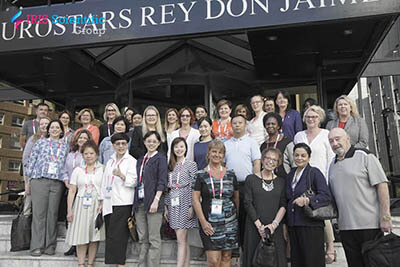
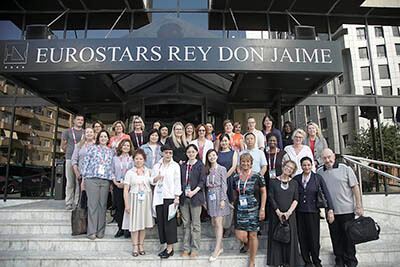
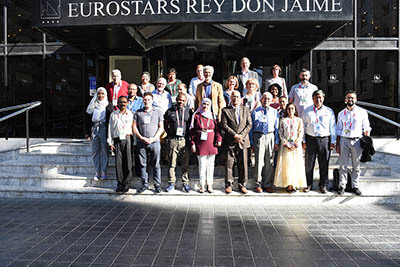
Iris Scientific Group takes great pride in announcing the successful outcome of the World Health Care and Nursing Conference (WHCN 2019) which was held in Valencia, Spain from September 23-25, 2019.
For WHCN 2019 Final Program: Click here
For WHCN 2019 Proceedings: Click Here
For WHCN 2019 Gallery: Click Here
In 2019 we were honored with the presence of renowned session leaders and keynote speakers worldwide. We want to thank the scientific committee for their dedicated participation, intellectual expertise, and their high-quality presentations.
Organizing Committee of WHCN 2019:
The Organizing Committee would like to thank the moderators Angela O'Connor, King Edward Memorial Hospital, Australia, and Carrinna A. Hansen, University of Copenhagen, Denmark for their contribution which ensued in the smooth functioning of the conference.
Iris Scientific Group is prerogative to thank the Organizing Committee Members, Keynote speakers; Chairs on engross the plenary sessions, workshops, and special sessions in an expanded manner to make this conference a privileged.
Nursing Conference 2019 Keynote Speakers:
Nursing Conference Speakers:
Nursing Conference 2019 Workshops:
Cynthia Horton, Cecil College, USA
Merita Kaunisto, Kuopio University Hospital, Finland
Hanna-Mari Nevala, Savonia University of Applied Sciences, Finland
Tiina Arpola, Savonia University of Applied Sciences, Finland
Nursing Conference 2019 Poster Presenters:
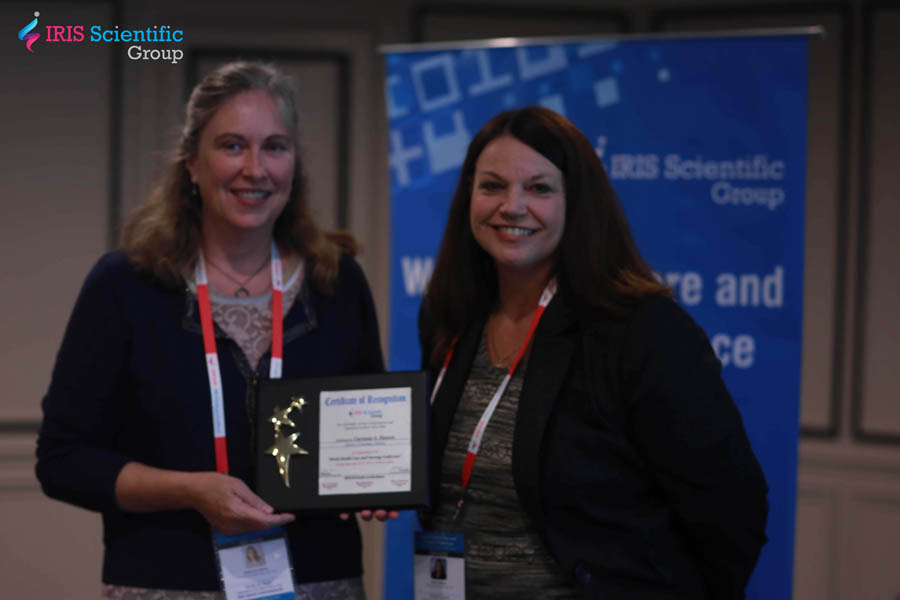
We congratulate the Best poster award winner Chantira Chiaranai, Suranaree University of Technology, Thailand. We would also like to thank Cynthia Horton, Cecil College, USA who supported us by evaluating the posters.
We thank all the participants for their magnificent contribution towards the event which facilitated us for the successful accomplishment of this event.
We greatly hope to see you again, with added vigor and with your other colleagues in "3rd International Nursing Networking Conference (INNC-2025)" during April 23-25, 2025, at Las Vegas, USA, and in Virtual format.
Iris Scientific Group takes great pride in announcing the successful outcome of the World Catalysis and Chemical Engineering Network Congress (WCCN 2025) which was held in Virtual Mode from April 23-25, 2025.
For WCCN 2025 Final Program: Click Here
In 2025 we were honored with the presence of renowned session leaders and keynote speakers worldwide. We want to thank the scientific committee for their dedicated participation, intellectual expertise, and their high-quality presentations.
Organizing Committee of WCCN 2025:
The Organizing Committee would like to thank the moderators Maria Jose Lavorante, Institution of Scientific and Technological Research for Defense, Argentina and Rahul Hajare, Sandip University, India for their contribution which ensued in the smooth functioning of the conference.
Iris Scientific Group is prerogative to thank the Organizing Committee Members, Keynote speakers; Chairs on engross the plenary sessions, workshops, and special sessions in an expanded manner to make this conference a privileged.
WCCN 2025 Keynote Speakers:
WCCN 2025 Plenary Speakers:
WCCN 2025 Speakers:
We thank all the participants for their magnificent contribution towards the event which facilitated us for the successful accomplishment of this event.
We greatly hope to see you again, with added vigor and with your other colleagues in “2nd World Catalysis and Chemical Engineering Network Congress (WCCN 2026)” during April 22-24, 2026. WCCN 2026 will be a hybrid event, offering both in-person and virtual participation options, allowing attendees to engage from anywhere in the world.
Iris Scientific Group takes great pride in announcing the successful outcome of the 3rd International Nursing Networking Conference (INNC 2025) which was held in Virtual Mode from April 23-25, 2025.
For INNC 2025 Final Program: Click Here
In 2025 we were honored with the presence of renowned session leaders and keynote speakers worldwide. We want to thank the scientific committee for their dedicated participation, intellectual expertise, and their high-quality presentations.
Organizing Committee of INNC 2025:
The Organizing Committee would like to thank the moderators Sofica Bistriceanu, Academic Medical Unit - CMI, Romania, and Anum Fatima, Chiang Mai University, Thailand for their contribution which ensued in the smooth functioning of the conference.
Iris Scientific Group is prerogative to thank the Organizing Committee Members, Keynote speakers; Chairs on engross the plenary sessions, workshops, and special sessions in an expanded manner to make this conference a privileged.
INNC 2025 Keynote Speakers:
INNC 2025 Speakers:
INNC 2025 Poster Presenters:
We thank all the participants for their magnificent contribution towards the event which facilitated us for the successful accomplishment of this event.
We greatly hope to see you again, with added vigor and with your other colleagues in “4th International Nursing Networking Conference (INNC 2026)” during April 13-15, 2026. INNC 2026 will be a hybrid event, offering both in-person and virtual participation options, allowing attendees to engage from anywhere in the world.
Iris Scientific Group takes great pride in announcing the successful outcome of the International Cancer Conference (ICC 2025) which was held in Virtual Mode from November 27-29, 2025.
For ICC 2025 Final Program: Click Here
In 2025 we were honored with the presence of renowned session leaders and keynote speakers worldwide. We want to thank the scientific committee for their dedicated participation, intellectual expertise, and their high-quality presentations.
Organizing Committee of ICC 2025:
The Organizing Committee would like to thank the moderators Don Mathew, Pacific Medical College & Hospital, India for his contribution which ensued in the smooth functioning of the conference.
Iris Scientific Group is prerogative to thank the Organizing Committee Members, Keynote speakers; Chairs on engross the plenary sessions, workshops, and special sessions in an expanded manner to make this conference a privileged.
ICC 2025 Keynote Speakers:
ICC 2025 Speakers:
We thank all the participants for their magnificent contribution towards the event which facilitated us for the successful accomplishment of this event.
We greatly hope to see you again, with added vigor and with your other colleagues in “2nd Edition of International Cancer Conference (ICC 2026)” during November 09-11, 2026. ICC 2026 will be a hybrid event, offering both in-person and virtual participation options, allowing attendees to engage from anywhere in the world.
Iris Scientific Group takes great pride in announcing the successful outcome of the Global Conference on Material Science and Nanotechnology (GCMN 2025) which was held in Virtual Mode from April 28-30, 2025.
For GCMN 2025 Final Program: Click Here
In 2025 we were honored with the presence of renowned session leaders and keynote speakers worldwide. We want to thank the scientific committee for their dedicated participation, intellectual expertise, and their high-quality presentations.
Organizing Committee of GCMN 2025:
The Organizing Committee would like to thank the moderators Santoshi Misra, St. Ann's College for women, India for her contribution which ensued in the smooth functioning of the conference.
Iris Scientific Group is prerogative to thank the Organizing Committee Members, Keynote speakers; Chairs on engross the plenary sessions, workshops, and special sessions in an expanded manner to make this conference a privileged.
GCMN 2025 Keynote Speakers:
GCMN 2025 Plenary Speakers:
GCMN 2025 Speakers:
GCMN 2025 Poster Presenters:
We thank all the participants for their magnificent contribution towards the event which facilitated us for the successful accomplishment of this event.
We greatly hope to see you again, with added vigor and with your other colleagues in “2nd Global Conference on Material Science and Nanotechnology (GCMN 2026)” during April 13-15, 2026.
GCMN 2026 will be a hybrid event, offering both in-person and virtual participation options, allowing attendees to engage from anywhere in the world.










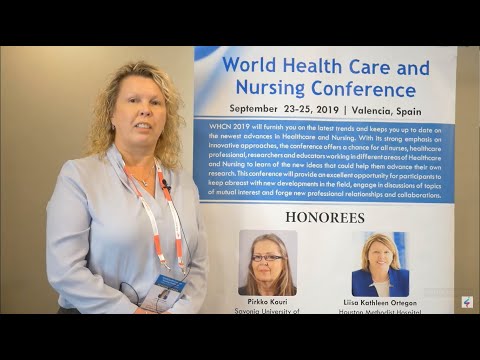
Thank YOU! For a wonderful experience. I met so many amazing people from all over the world and many of us bonded going forward. All the presentations were full of new and exciting things to hear and the hotel was just lovely. I enjoyed every minute.
 Penny Daugherty
Northside Hospital Cancer Institute, USA
Penny Daugherty
Northside Hospital Cancer Institute, USA
I met some extraordinary nurses from all over and was so impressed with their work
 Elaine Clear
St Vincent's University Hospital, Ireland
Elaine Clear
St Vincent's University Hospital, Ireland
Such a distinguished conference and the entire magnificent organization
 Elena Baixauli Gallego
University of Valencia, Spain
Elena Baixauli Gallego
University of Valencia, Spain
Overall, the Conference was a success. Interesting topics and excellent speakers
 Elvessa Narvasa
Canadian Council of Cardiovascular Nurses, Canada
Elvessa Narvasa
Canadian Council of Cardiovascular Nurses, Canada
Thank you very much for a nice and interesting conference in Valencia, I really enjoyed it!
 Carrinna A. Hansen
University of Copenhagen, Denmark
Carrinna A. Hansen
University of Copenhagen, Denmark
The conference added value to me on medical robots as I would like to apply them to Zambia.
 Margaret C. Maimbolwa
University of Zambia, Zambia
Margaret C. Maimbolwa
University of Zambia, Zambia
An amazing scientifically enriching continued professional development meaningful experience with a brilliant platform for dynamic collaborations with interactive discussions and expert opinion-insights offering fascinating translational/public health avenues for evidence-based novel immunotherapy regimens and eventual design of predictive biomarkers for cost-effective disease management of inflammatory diseases with emphasis on evidence-based health management viz. gynecologic disorders/diseases in women of diverse genetic landscapes and lifestyles.
 Saumya Pandey
Indira IVF Hospital, India
Saumya Pandey
Indira IVF Hospital, India
The INNC platform provides information from various fields in healthcare for nurses, researchers, educators, administrators, policymakers, and students to improve their knowledge and experiences. In this new digital era, exchanging information in a real and virtual community promises to be a more efficient and attractive way to enrich our lives, foster meaningful relationships, and build a comprehensive and informative database for a better inner world and existence. Participation in these events gratifies people with credentials, recognizing their involvement in learning and contribution to science advancement.
 Sofica Bistriceanu
Academic Medical Unit - CMI, Romania
Sofica Bistriceanu
Academic Medical Unit - CMI, Romania
Dear colleagues, thank you for the honor and opportunity to participate in the conference! As always, the geography of the participants, the diversity of topics, and the breadth of interests are pleasing. Various aspects related to nursing, teaching methods, and preventive medicine were important. Such a broad exchange of opinions serves mutual enrichment, deepening mutual understanding, and international cooperation. I wish you further success and prosperity!
 Petrova Nataliya
Saint Petersburg State I. P. Pavlov Medical University, Russian Federation
Petrova Nataliya
Saint Petersburg State I. P. Pavlov Medical University, Russian Federation
Thank you for allowing me to participate in the conference. It was indeed an honor to share information with colleagues from around the world in a virtual setting. By using this technology platform, we are able to become more engaged and immersed in clinical research which truly can make an impact on future clinical practice. I am looking forward to the next INCC conference where knowledge is exchanged and shared.
 Daryle Wane
Pasco-Hernando State College, United States
Daryle Wane
Pasco-Hernando State College, United States
It was my first participation on an international conference. It was a very valuable and exciting experience for me. The special thing was to understand the different participants because of their mother tongue. My greatest fear was not to be able to understand the others, an other doubt was the insufficiency of my english. so, my advice for every new participant is not to be too nervous, because this event is great and connects us! It would be great to stay in touch.
Wish you all the best and hope to hear from you!!
 Schaffer Daniela
Klagenfurt Hospital, Austria
Schaffer Daniela
Klagenfurt Hospital, Austria
International Nursing Networking Conference (INNC) 2025. Attending INNC 2025 was an incredible experience. I connected with passionate professionals from around the world, gained valuable insights, and left feeling truly inspired. The sessions were impactful, the networking was genuine, and it reminded me why I chose nursing in the first place. I'm grateful for the opportunity and highly recommend it to anyone in the field.
 Lilian Sitsofe Ziga
Nursing and midwifery training college Odumase krobo, Ghana
Lilian Sitsofe Ziga
Nursing and midwifery training college Odumase krobo, Ghana
I had the honor of participating with you in your major scientific conference. I hope you will share the conference documents with me. Thank you for the opportunity. I am currently developing a detailed protocol on the role and policies of nursing during disasters and catastrophes, including the role of nursing in nuclear disasters. I hope to have future scientific meetings to share and develop science.
 Yousef Ahmed Al shaabi
Sanaa University, Yemen
Yousef Ahmed Al shaabi
Sanaa University, Yemen
Great greetings, Thanks a lot for your great efforts & unlimited care. It was a great & valuable conference. All presentations were fruitful. Looking for more future collaboration.
 Eman Salman Taie
Helwan University, Egypt
Eman Salman Taie
Helwan University, Egypt
I sincerely appreciate the privilege to be part of the participants at GCMN 2025. The conference was indeed an eye opener to the advancements in Material Science in various continents of the earth. The conference was really a success. Special thanks to the organizers of the academic conference for their hard work and support given to all participants before, during and after the scheduled conference activities.
 Olaniyi Awe
Obafemi Awolowo University, Nigeria
Olaniyi Awe
Obafemi Awolowo University, Nigeria

Copyright © 2021 IRIS Scientific Group | All Rights Reserved Terms and Conditions | Privacy Policy